ON SEASONS
On the end of a season
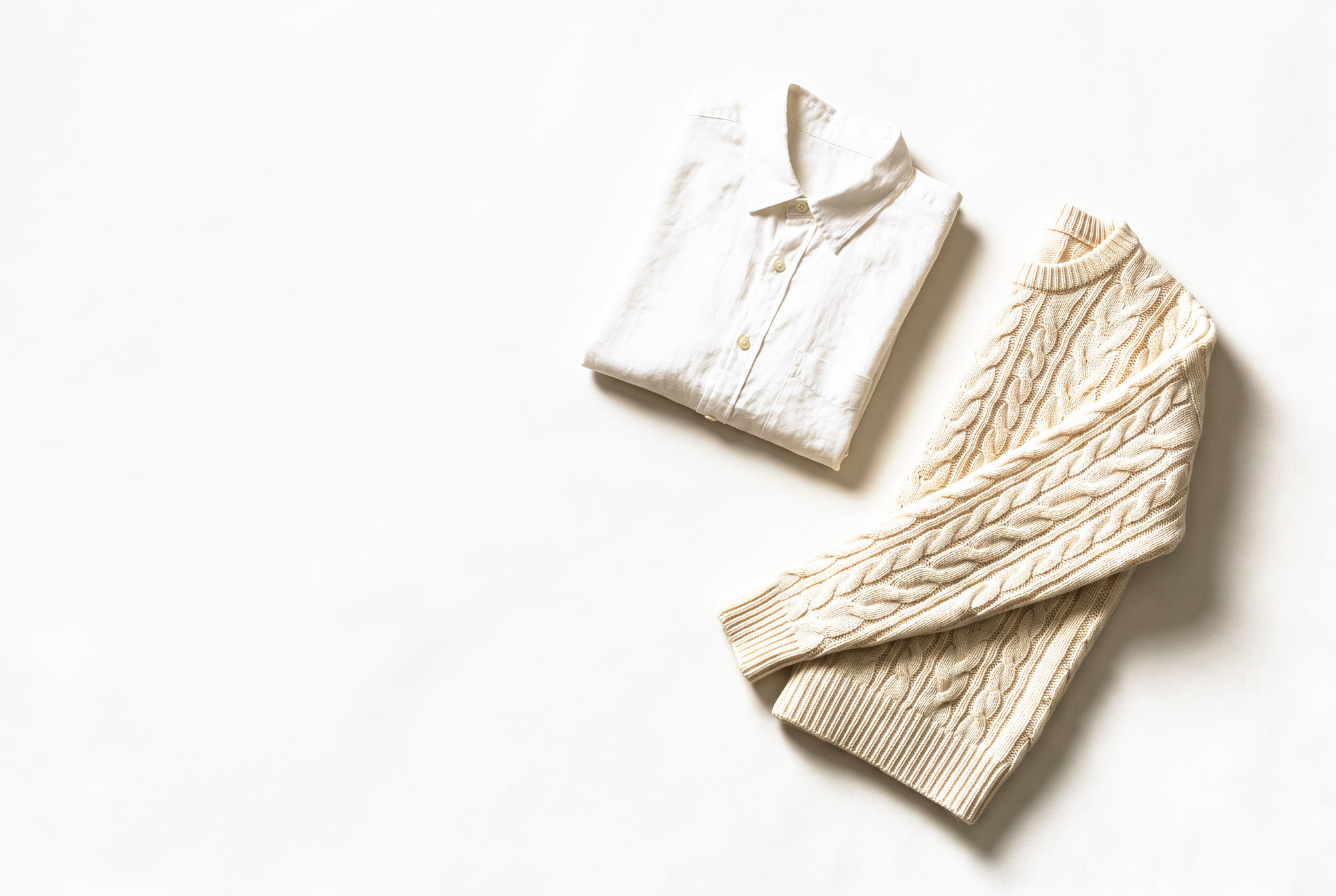
By the middle of August the summer is over as a matter of clothing, whatever the weather decides to do next. The decisions have all been made. Whatever you were going to wear this year, you have worn, and what remains is the small administrative business of putting it away.
That business is the most useful hour a wardrobe will give you all year, and almost nobody treats it as anything but a chore.
The clothes tell you, is the thing. Laid out on the bed before they go into the box, they separate into two populations without any effort on your part. There are the three or four garments that look used: the linen shirt gone soft and a little shapeless at the collar, the cotton dress with a faint mark near the hem you long ago stopped noticing, the sandals moulded to the shape of an actual foot. And then there are the others, eleven or twelve of them, which come out of the drawer in precisely the condition they went in. Creased along the fold you made last September. Unmarked. Perfect.
We are trained to read that perfection as care — evidence of a garment well kept. It is nothing of the sort. A pristine summer dress in August is a dress that spent the summer in a drawer. Its condition is not preservation but an alibi, and the wardrobe has just handed you the whole account without being asked.
The difficulty in judging a wardrobe honestly is finding a stretch of time that is long enough to mean something and short enough to still see. A week tells you nothing; you wore what was clean. A decade tells you too much, and by then the evidence has been destroyed, because the garments that failed were quietly removed years ago and the survivors make the whole enterprise look far more deliberate than it was.
A season is the rare interval that is both. It has a beginning and an end, and it is now closed. Every warm-weather garment you own was hanging there, available, for something like four months, under broadly the same conditions, competing on equal terms for the same mornings. Nothing was hidden. Nothing was unavailable. Whatever you reached for, you reached for freely, over and over, with the alternatives in plain sight. That is not a mood or an impression. It is as close to a controlled result as ordinary life ever produces.
And you will not remember it. This is the part worth insisting on, because it is the reason the changeover matters rather than the wardrobe simply telling you what you already knew. Memory of what we wear fails in one specific direction: we retain the exceptions and lose the routine. You remember the dress from the wedding in June, because there are photographs of it and because it was a day that announced itself. What you do not remember, at all, is the navy t-shirt you put on eleven separate times between May and now — on the ordinary Tuesdays, the trip to the garden centre, the two days you worked from the kitchen table. Nothing marked those mornings as worth recording, so they were not recorded.
The garments kept the count anyway, in the only language available to them. Softness. Thinning at the elbow. The particular way a collar gives up. The wardrobe does not remember on your behalf. It simply shows you, once a season, if you are holding it at the time.
So the changeover is worth slowing down for, and there is one question to ask while you are in it. Not do I love this, which is a mood and will answer differently depending on the day and the light and how you feel about yourself that morning. The question is: did I wear this?
It has the great advantage of having an answer. It is not a matter of taste, and it cannot be argued with, and the garment in your hands has already replied before you have finished asking.
One unworn season is information rather than a verdict. Summers are uneven; a wet July can keep a perfectly good dress in the drawer through no fault of its own, and the thing you bought in the last week of August never stood a fair chance. Note it and pack it. Two unworn seasons is a verdict. A garment that has now sat out two summers has told you the same thing twice, in the plainest terms available to it, and a second season is where a possibility becomes a pattern.
There is an honest exemption, and it needs stating or the rule hardens into dogma. Some clothes are not meant to be worn often. The formal coat, the black tie, the one good suit that appears at funerals and weddings and nothing in between — these are not failures of a wardrobe, they are a wardrobe doing something specific and doing it rarely. To apply a frequency test to them is to mistake a rule for a principle.
The whole skill is telling those apart from their impostors, and the test is simply whether the occasion actually arrived. A suit worn twice in three years, at two funerals, is working exactly as intended. A suit bought for the dinners you thought you would be invited to is not occasional. It is hopeful, which is a different thing wearing the same clothes, and the wardrobe is generally kinder about the distinction than we are.
Nothing dramatic needs to follow from any of this. You are not obliged to act in August, and a changeover that turns into a purge tends to produce its own regrets by February. The value is in the noticing, not the disposal. It is enough to put the eleven untouched things back in the box knowing they are eleven untouched things, which is more than you knew this morning.
Because the box you tape shut this month, you will open in May, and you will open it as a stranger. Nine months is long enough that the contents arrive as somebody else’s decisions — and they will arrive persuasively, because they will be clean and pressed and unfamiliar, and unfamiliar is very close to new. You will unpack the eleven unworn garments, hang them up, feel briefly reassured by how much summer clothing you appear to own, and then wear the same three things again.
And by June you will be shopping. For a linen shirt, most likely, because your linen shirt is finally finished and the untouched ones were never right — which was, of course, why they went untouched. You will be buying a wardrobe you already own, at the only time of year when it is impossible to tell.
Now is when it is possible. The clothes are in your hands, the season is closed behind you, and for about an hour the evidence is all in one place.