The House · MMXXVI

A house for the considered wardrobe.

A digital fitting-room mirror. A stylist's notebook. A curator's ledger. Atelier keeps your wardrobe in mind so you don't have to, and dresses you from it with the same care a fashion house gives its collection.

I

Where we began

It started with a private question.

What would it look like to treat a personal wardrobe the way a fashion house treats a collection? Every piece accounted for. Every outfit considered. Every investment understood for what it returned.

Closets are the most expensive rooms most of us own. We choose their contents carefully and forget about them by mid-afternoon. The pieces we love most go unworn because we've stopped seeing them; the ones we regret stay in rotation because they're visible. What should be a private library of how we dress has become, for most of us, a small daily failure of attention.

Atelier exists because that failure isn't really about taste. It's about tooling. A wardrobe that knew itself, that knew what was in it and how it had been worn, could quietly fix what shopping never has.

II

The Practice

What goes on inside the studio.

A line drawing of an open wardrobe: garments on a rail, dress forms behind glass, a mirror, and a shelf of books.
The wardrobe, kept in mind.

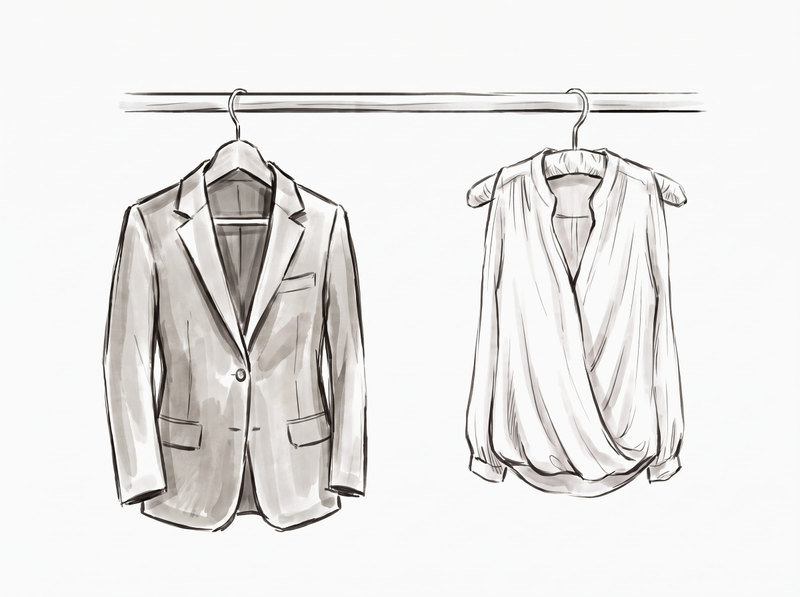
You sign in and your closet is on the page. Every garment you've added sits there as a quiet inventory: brand, material, the day you bought it, the days you've worn it. The Concierge is a private stylist who has read it all. Ask what to wear today. What to pack. What's missing. What you should let go of.

When you don't feel like composing, the Concierge does. One tap and a head-to-toe outfit appears, drawn from your collection with the reasoning attached. Wear it, save it, or send it back. It learns from every wear you log.

Once a season, Atelier writes you a Style Manifesto: a private three-paragraph reading of your aesthetic, composed from how you actually dress. Not a personality test. A piece of editorial criticism about your own closet, written for you alone.

III

The Chronicle

How the studio came to be.

  1. MMXXIV

    A wardrobe begins keeping its own ledger.

  2. MMXXV · VI

    The Concierge writes its first manifesto.

  3. MMXXV · X

    The Lookbook learns to compose.

  4. MMXXVI · I

    The studio opens for membership.

IV

For Whom

For the considered closet.

For the reader who asks how many times will I wear this before the price. For the owner of forty pieces, not four hundred. For the dresser who reaches first for what they already own.

Atelier isn't for the person who wants more clothes. It's for the person who wants less, used better.

V

A Manifesto · By way of example

One we composed for a fictional member.

Every member receives a private brief: a three-movement reading of their aesthetic, written from their wardrobe data. This one was composed for a fictional member, Lena, who reads colour as architecture.

Style Manifesto

composed for L — , Volume I, MMXXVI

You dress in the language of weight. The pieces you reach for most often share a quiet density — wool that holds its shape, silk that drapes with consequence, cotton with a hand thick enough to fold and remember the fold. Twelve of your last twenty wears were single-fabric statements; you mistrust pieces that announce themselves.

The palette is a closed circuit. You move between charcoal, camel, oat, and ink, with three deliberate breaks — a champagne silk, an ivory tweed, the silk twill scarf you've worn nine times this year. Black appears rarely and always alone. The pieces that have gone unworn — eight of them — are the ones that broke this circuit on impulse.

What you are styling toward is unmistakable but unhurried. You favour an outfit that resolves in two glances rather than one: a coat that proves its tailoring on the third inspection, a hem that costs nothing for the eye to find. The Concierge will continue to suggest accordingly.

Atelier — The Long Barn, Surrey

Your own manifesto is composed from your wardrobe, your wears, and the looks you've saved. The studio nudges you for a refresh each season.

VI

What we stand for

Quiet luxury, applied to software.

  • N°. I

    Your wardrobe is your data.

    Your collection, your wears, your manifesto: they belong to you. We won’t sell them, rent them, or use them to train anyone else’s model.

  • N°. II

    The aim is not to acquire more.

    Atelier sells nothing else. No affiliate links, no marketplace, no promoted pieces. The studio works in your favour because there is nothing else to serve.

  • N°. III

    Restraint is a feature.

    No notifications begging you back. No streaks, no gamification, no growth-team confetti. The studio is here when you arrive, quiet when you don't.

VII

The Maker

Atelier is composed by
Sibylle Möller-Sherwood.

Sibylle Möller-Sherwood, founder of Atelier
Sibylle Möller-Sherwood · MMXXVI

My day work is data. I am the person organisations bring in to make sense of what they know: the reporting, the systems behind it, and lately the question of what AI should be allowed to do with it all. It is careful, exacting work, and it turns out to be very good training for keeping a wardrobe.

Atelier is the other half of my life. I have always loved fashion and, when I could afford it, invested in pieces meant to last. The wardrobe I've quietly built over the years isn't one I want to replace each season.

Atelier started before a summer trip. My husband and I sat down one Saturday to plan what we'd both pack. He could tell me his wardrobe in two minutes: three trousers, four shirts, the jacket. I couldn't. Not properly. The gap between a closet of carefully-chosen pieces and a head that couldn't quite see them all turned out to be a tool that didn't yet exist. So I built one. For myself first. Then for friends. Now for anyone who, like me, wants less, used better.

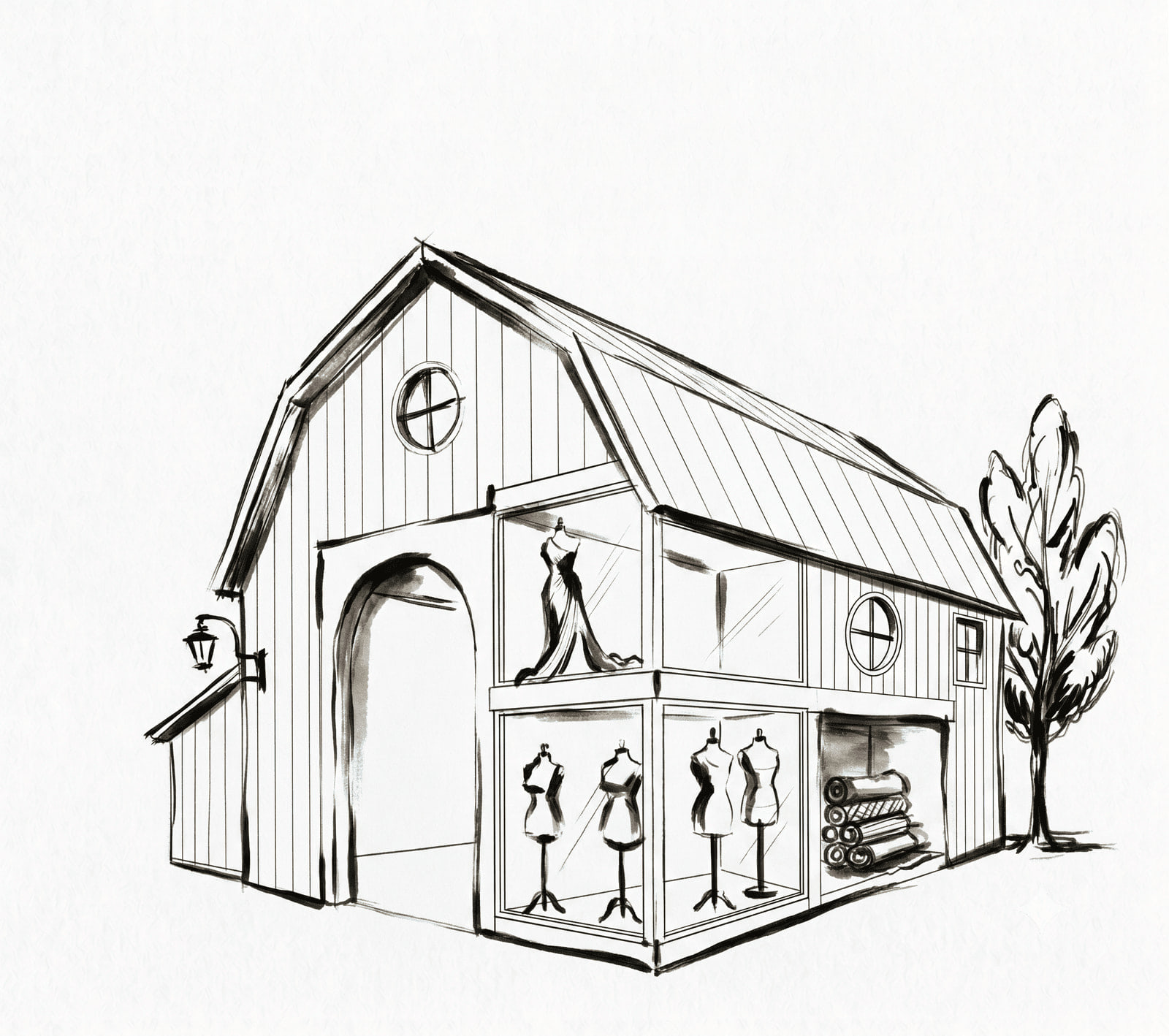
The studio sits in a converted barn in Cobham, Surrey. For now: one person, one barn, a great deal of cashmere. Atelier is privately held and self-funded. No investor in the closet. The product is the business.

The Invitation

Step inside the studio.

Begin with a fourteen-day trial. Read your own manifesto inside.

Find the keys

Atelier

est. MMXXVI · Surrey