ON THE SELF
On the closet as autobiography
There is a scene that visits, eventually, anyone with a wardrobe of any age. You are looking for something. You move aside the things at the front and reach toward the back, where the years go, and your hand closes on a garment you had completely forgotten you owned. It is not torn or stained, nor anything else that might explain its banishment. On inspection it is perfectly fine. It is simply old, in the particular sense that you are no longer the person who bought it.
You hold it up. You remember, vaguely, the shop. You remember, perhaps, the reason: a job interview, a trip, a wedding, an instinct that the colour was somehow right for the year. You try, briefly, to put it on. It fits. It does not, however, look like you. The garment has stayed the same; you have moved.
This small event, repeated thousands of times across the small lives of millions of wardrobes, is the closest thing most of us have to a private autobiography.
A book of memoir is written deliberately. Its author chooses what to include, edits out what does not serve the narrative, polishes the prose until the past makes a kind of sense it did not possess at the time. The result is shaped: sometimes beautifully, sometimes evasively, but always intended.
A wardrobe is written involuntarily. No one sits down at twenty-five and decides what they will put on their body for the next decade. Each acquisition is a small, isolated decision made for a particular reason: a need, a feeling, a colour seen in passing, a vague sense that this is what someone like me would wear. The clothes accumulate without an author. And yet, somehow, they accumulate a self.
This is what makes the wardrobe such an honest document. The intentional autobiography lies, because narrative requires it to. The wardrobe cannot lie. It can only record. It records the period when you wore black for two years and then stopped. It records the trousers you bought because a colleague had them, and never wore because you are not that colleague. It records the dress you bought twelve months before the relationship ended and have not put on since.
Read attentively, the closet tells you what you have actually wanted, as opposed to what you remember wanting. The two are rarely the same.
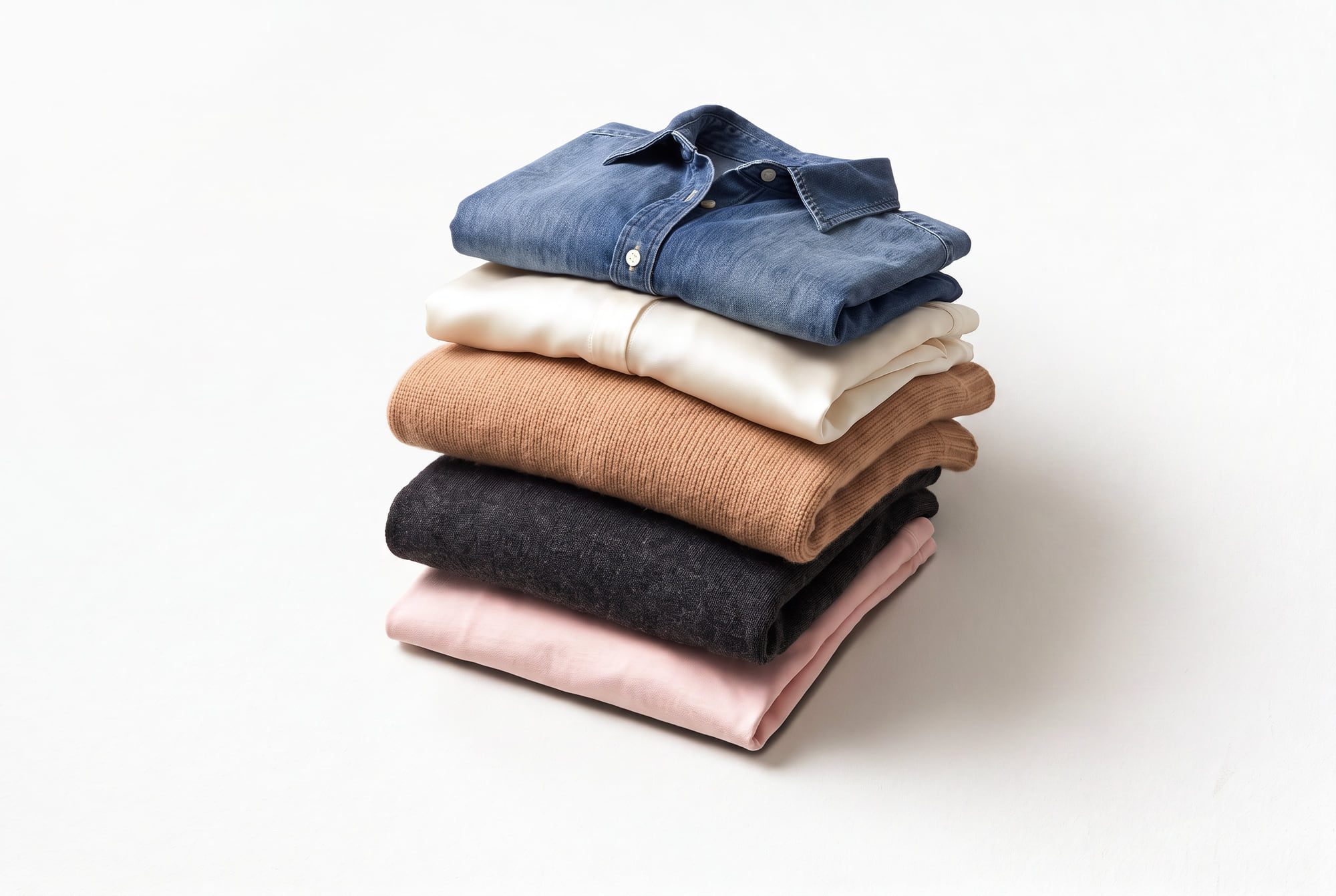
In any wardrobe more than five years old, there is a kind of geological layering. The strata are usually invisible to the owner. Clothes are arranged by category, shirts together, trousers together, rather than by era, and the brain that does the arranging is the same brain that has been forgetting things for a decade. But the strata are there.
The oldest layer, at the back of the rail, is the most archaeological: items from a former life. A coat from a city you no longer live in. A jumper bought for a job you no longer have. These pieces are kept not because they will be worn but because the cost of throwing them away has not yet exceeded the cost of looking at them.
The middle layer is the great undifferentiated mass, the working wardrobe of the last three or four years. It contains a few favourites and a great deal of inertia. Most of these items will, statistically, leave the wardrobe within the next two years, but none of them know that yet.
The newest layer, near the front, is the easiest to mistake for the self. These are the items you wore last week, the ones you reach for in the morning, the colours and shapes that feel current. But many of them will not survive a year. Some are already on their way out, having been bought in a slightly wrong size, in a slightly wrong moment, against a slightly different version of you than the one currently doing the wearing.
The constants are different. The pieces that have survived multiple culls, that have outlasted relationships and houses and jobs, sit hidden in plain sight: the navy jumper, the grey coat, the white shirt, the black boots. They look unremarkable precisely because they have been remarked upon, by you, for so long that you have stopped noticing them. They are the centre of gravity of your wardrobe, and therefore of the version of you the world has actually been looking at.
If a wardrobe is autobiography, the most revealing parts of it are not the things acquired but the things acquired and never worn.
Every closet has them. The trousers bought for a job that turned out not to require them. The dress kept for an occasion that never quite arrived. The shirt bought in a colour you are not, on reflection, brave enough to wear in daylight. Each is the trace of a self that was being aspired to, and quietly declined, at the moment of purchase.
These items are difficult to be honest about. Looking at them, the temptation is to insist that they will be worn next year, when you have lost the weight, or moved jobs, or become someone slightly different. Occasionally this is true. More often the garment is a small, unworn monument to a version of yourself you have, in fact, no plans to become.
A wardrobe with too many such monuments becomes oppressive. Getting dressed, instead of being a pleasure, becomes a daily encounter with a parliament of disappointed possible selves. The dress on the hanger says: you were going to be the kind of person who wore me. You are not. What now?
The healthy wardrobe, at any age, contains very few of these. The unhealthy one contains many.
What we discard is also part of the autobiography. The cull is, in fact, one of the most truthful acts a person performs all year: more truthful than the resolutions, more truthful than the new-year inventory of intentions. To cull a wardrobe is to look at the catalogued evidence of who you have been and acknowledge, garment by garment, what is still you and what is not.
The pieces that go in the bag for the charity shop are, in their way, a list of completed selves. The black blazer was bought when you needed to look serious; you no longer need to. The skirt was bought when you wanted to look feminine in a particular way; you have moved into a different idea of femininity. The shirt was bought because everyone was wearing that colour; that moment has passed.
There is grief in this, occasionally. To put a garment in the bag is to acknowledge that the version of you who bought it is no longer reachable. The cull is honest about something the rest of life rarely is: that selves are temporary, and that even the ones that felt definitive at the time were only one of many we would briefly occupy.
What remains, after each cull, is what has earned its place. Not necessarily the most expensive things; certainly not the most fashionable; almost never the things we expected to keep when we bought them. The survivors are the pieces that have, in some quiet way, become part of how we move through the world.
To pay attention to a wardrobe in this way, to read it rather than merely wear it, is not a project of vanity. It is a project of self-knowledge. The closet is one of the few places in modern life where the record of our choices is physical, dated, and inspectable. The streaming history is more digital. The bank statement is more abstract. The photo roll is curated by algorithm. The wardrobe just sits there, three colours of jumper and a row of jeans, telling the unedited truth.
Most people pass their entire lives without reading it.
This is, in some sense, the original work of a wardrobe-keeping practice. Not styling, not curation, not even reduction, but simply the willingness to look. To stand in front of the closet on a Saturday morning, not in order to choose what to wear, but in order to see what is there. The slow recognition of the strata, the honest naming of the constants, the gentle relinquishing of the monuments. The autobiography reading itself back to its author.
After enough of this, dressing itself changes. You are no longer dressing the person you imagine being. You are dressing the person the wardrobe, read honestly, has already revealed you to be.